Special Tax Status Consolidation: What Has Changed and Why
Malta's four legacy special tax status frameworks each carried their own subsidiary legislation, minimum tax and property rules, despite sharing the same underlying 15% mechanism. The Individual Tax Programme Rules, 2026 bring them under one framework with a harmonised administrative structure, while preserving the distinct eligibility logic of each beneficiary category — non-EU nationals under global resident status, EU/EEA/Swiss nationals under EU/EEA/Swiss resident status, retirees under retired pensioner status, and UN pensioners under a status now formally recognised within the same instrument rather than a standalone programme.
The New Minimum Tax and Property Framework
From 1 January 2027, the minimum annual tax is €35,000 for global resident and EU/EEA/Swiss resident status, and €15,000 for retired pensioner status, up from the previous €15,000 and €7,500 (plus €500 per dependant) respectively. UN pensioner status carries a distinct €20,000 minimum on income other than the UN pension itself, which remains fully exempt once received in Malta, provided at least 40% of it is remitted here.
Qualifying property is likewise standardised: a purchase of at least €700,000 or an annual rental of at least €14,000, applicable uniformly across Malta and Gozo, replacing the previous lower regional thresholds. Property already held before the rules come into force at a lower value continues to qualify, at the Commissioner's discretion under guidelines to be published.
Validity, Renewal and Succession
Special tax status now runs for a fixed five-year term from the appointed day, renewable for further five-year periods on payment of a €2,500 administrative fee, with renewal not to be unreasonably withheld by the Commissioner. The rules also introduce a formal succession mechanism: on a beneficiary's death, a dependant who inherits the qualifying property, or takes over the qualifying rental, may succeed to the special tax status, subject to satisfying the usual eligibility conditions.
Transitional Protection to 2031
Any special tax status granted on or before 31 December 2026, and any application received by that date even if approved afterwards, continues under the current GRP, TRP, MRP or UN Pensioners Programme terms until 31 December 2031. From 1 January 2027, all new applications proceed under the Individual Tax Programme Rules, 2026.
How Our Tax and Immigration Lawyers Can Help
Chetcuti Cauchi's Tax and Immigration teams advise non-EU nationals, EU/EEA/Swiss nationals, retirees and UN pensioners on Malta special tax status planning, including eligibility assessment, Authorised Registered Mandatary representation, and timing applications to secure transitional protection before 31 December 2026.
FAQs on Individual Tax Programme
[question]Does the Individual Tax Programme replace the Global Residence Programme, The Residence Programme and the Malta Retirement Programme?[/question]
[answer]Yes. From 1 January 2027, new applicants apply under the Individual Tax Programme Rules, 2026 rather than the previous separate programmes, though existing beneficiaries and timely applicants retain the current terms until 31 December 2031.[/answer]
[question]What is the minimum annual tax under the Individual Tax Programme?[/question]
[answer]€35,000 for global resident status and EU, EEA, Swiss resident status, €15,000 for retired pensioner status, and €20,000 on non-UN-pension income for UN pensioner status.[/answer]
[question]Can I still apply under the current GRP, TRP or MRP rules?[/question]
[answer]Yes, provided your application is filed by 31 December 2026, this secures the current, lower thresholds until 31 December 2031, even if approval is issued after that date.[/answer]
[question]Are the Gozo and South of Malta property discounts still available?[/question]
[answer]No. From 1 January 2027, the €700,000 purchase and €14,000 rental thresholds apply uniformly across Malta and Gozo.[/answer]
[question]Is UN pension income taxed under the new rules?[/question]
[answer]No. UN pension or Widow's or Widower's Benefit income, once received in Malta following the grant of UN pensioner status, is exempt from income tax. The €20,000 minimum tax applies only to the beneficiary's other foreign income.[/answer]
[question]Can special tax status be passed on after death?[/question]
[answer]Yes. A dependant who inherits the qualifying property, or continues the qualifying rental, may succeed to the beneficiary's special tax status, provided the usual eligibility conditions continue to be satisfied.[/answer]
About the Authors: Professional Contribution and Expertise
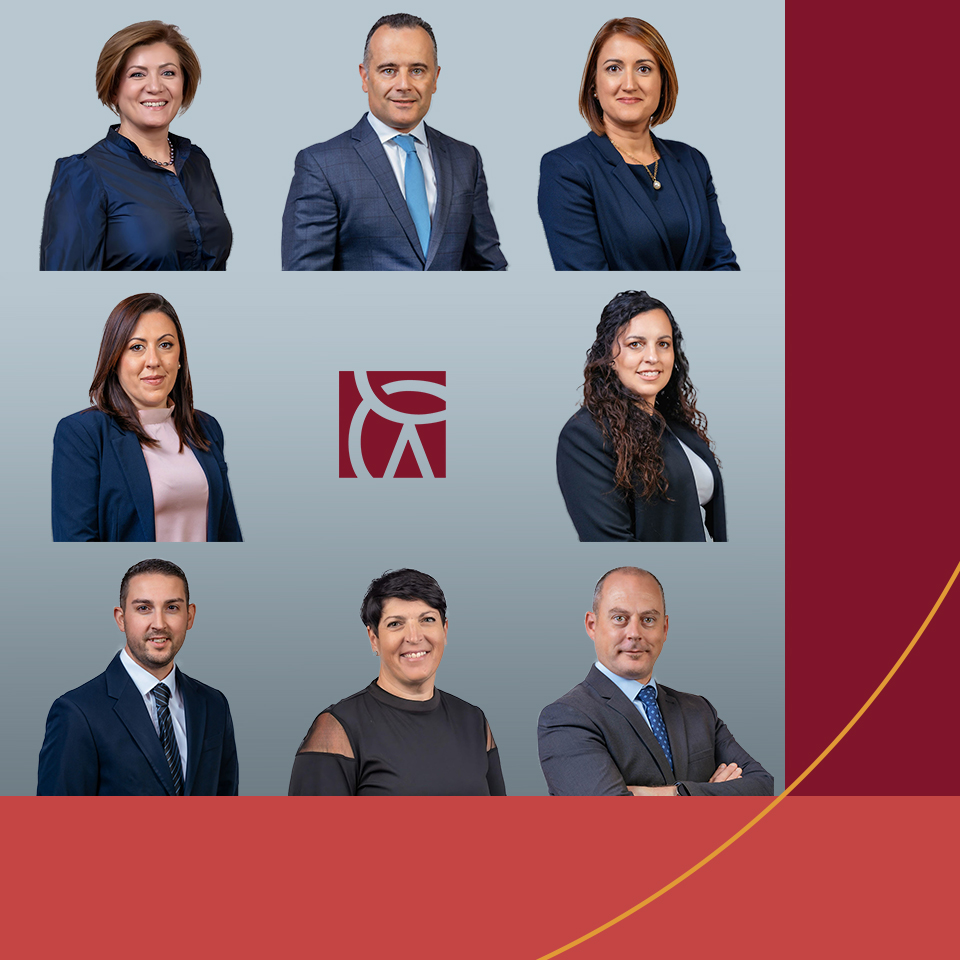
Dr Jean-Philippe Chetcuti, Senior Partner at Chetcuti Cauchi Advocates, is a private client, tax and citizenship lawyer who has advised on Maltese special tax status and residence matters since 1999, when he was first accredited to handle Permanent Residence applications in Malta. He is an Authorised Registered Mandatary for Malta's special tax status residency programmes (ARM05987) and has, since 2002, handled over 2,000 citizenship and residency applications. He is the proponent of the Doctrine of Contributive Belonging in international and European citizenship law and designed the CCLEX Mobility Assets Spectrum™ for residencies and citizenships of the world. He is recognised in Who's Who Legal for Malta, as a notable tax practitioner in ITR World Tax, and as a Chambers and Partners-ranked Private Wealth Lawyer in Malta. He is the author of The Dual Citizenship Report (Global, European, and Russia & CIS editions) and a regular contributor to Investment Migration Insider and STEP Journal on citizenship and investment migration matters.
Magdalena Velkovska, Director – Private Client Tax at Chetcuti Cauchi Advocates, advises private clients and internationally mobile individuals on Malta special tax status and personal tax planning, and co-authored, with Dr Chetcuti, the Malta chapter of a forthcoming Wolters Kluwer book on international relocation and tax planning for high-net-worth individuals. She has contributed professional commentary to STEP Journal on Maltese private client tax matters.