Contact us
Published:
18.11.2026
Last Updated:
18.11.2026
18.11.2026

What the World Tech Legal Summit Revealed About Scaling Innovation

reading time
By
No items found.
Scroll to explore
what's inside

Post-event analysis of the live debates, commercialisation cases and cross-border decisions shaping technology growth.

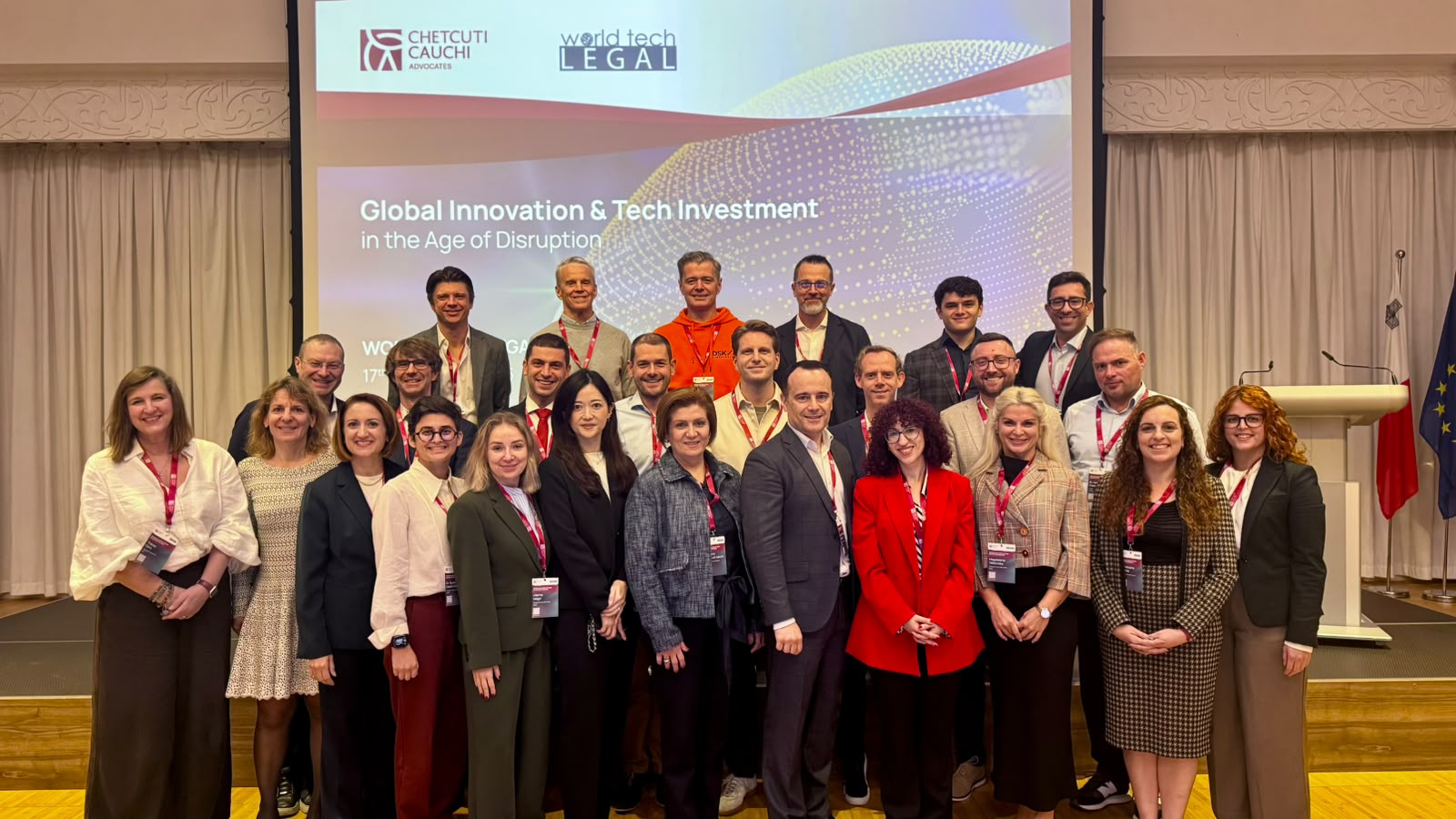
The Summit did not produce one neat answer to the challenge of scaling innovation – and that was its value. The live discussions exposed recurring tensions between speed and certainty, simplicity and future-proofing, openness and control, and technological possibility and human responsibility. This report focuses on those tensions through the arguments, transaction examples, research cases and audience questions recorded during the event. It does not repeat the pre-event programme. Instead, it examines what the speakers’ experiences suggest for founders, investors, researchers and advisers after the room has emptied.

full article

Copyright © 2025 Chetcuti Cauchi. This document is for informational purposes only and does not constitute legal advice. Professional legal advice should be obtained before taking any action based on the contents of this document. Chetcuti Cauchi disclaims any liability for actions taken based on the information provided. Reproduction of reasonable portions of the content is permitted for non-commercial purposes, provided proper attribution is given and the content is not altered or presented in a false light.

continue learning
what's inside

Post-event analysis of the live debates, commercialisation cases and cross-border decisions shaping technology growth.

The Summit did not produce one neat answer to the challenge of scaling innovation – and that was its value. The live discussions exposed recurring tensions between speed and certainty, simplicity and future-proofing, openness and control, and technological possibility and human responsibility. This report focuses on those tensions through the arguments, transaction examples, research cases and audience questions recorded during the event. It does not repeat the pre-event programme. Instead, it examines what the speakers’ experiences suggest for founders, investors, researchers and advisers after the room has emptied.

  • Regulatory certainty can be valuable enough to change a transaction’s economics, while excessive delay can redirect capital to another jurisdiction.
  • Founders should preserve options, but premature structural complexity can consume resources before the business has proved what it needs.
  • AI governance is becoming an investment-readiness issue: unmanaged data, supplier dependence and unclear responsibility can reduce value during due diligence.
  • Relocation decisions are shaped first by people, markets and operating reality; tax incentives work only when the founder’s personal and corporate arrangements remain coherent.
  • Family-office capital may be patient, but it is not passive. Mandate, risk tolerance, technical diligence and post-closing oversight still need to be explicit.
  • Innovation value often sits outside registered rights – in data, know-how, licences, trade secrets and the people capable of explaining how the technology actually works.

Who is this for

This analysis is for readers who alreadyunderstand the event’s broad subject matter and want the practical lessons thatemerged from the room – particularly founders approaching investment, investorstesting technology risk, researchers considering commercialisation, andadvisers coordinating decisions across jurisdictions.

What this means for you

The event’s value lies in the choices itclarified. Businesses should decide what must be addressed now, what can remainsimple until a trigger point, and which risks cannot be repaired onceinvestment, relocation or commercialisation is already under way. The sectionsbelow retain the disagreements because they show where judgement – not astandard template – is required.

The first challenge: outcomes over scale

Prof. Alexiei Dingli set the tone bychallenging the metrics commonly used to describe AI progress. Bigger models,greater investment and rapid adoption do not establish that a system isreliable, useful or understood. His examples repeatedly separated performancein controlled conditions from performance in the real world – a distinctionthat returned later in the panels on governance, investment and intellectualproperty.

The implication was not that Europe shouldattempt to recreate the previous generation of AI competition. It was thatjurisdictions and businesses need to choose where they can produce betteroutcomes – through reliability, edge deployment, language and culturalrelevance, human oversight and control over data and infrastructure.

“Europe cannot win yesterday’s AI race.”
‍
Prof. Alexiei Dingli, Professor of Artificial Intelligence, University of Malta – opening keynote

Prof. Dingli argued that the next AI racewill not necessarily be won by the largest model or the highest spending. Hisexamples showed why outcomes and reliability matter: students using AIreportedly improved homework results while performing worse in examinations;simulated robots achieved far higher success rates than robots operating inreal homes; and human oversight can become little more than a “rubber stamperin the loop” when people cannot meaningfully test a system’s reasoning. Hecalled for more reliable edge AI, stronger data control, culturally andlinguistically adaptable systems, and a Maltese-language capability thatreflects local needs rather than importing every assumption from largermarkets.

Six debates that moved beyond the programme

Capital flows in an age of disruption

Moderator: Dr. Jean-Philippe Chetcuti, Managing Partner, Chetcuti Cauchi Advocates
Contributors:
Dr. Danielle Mercieca; Dejan Perić; Dr Christian Badura

The opening panel treated technology capital as a question of sovereignty as well as return. European defence spending, proposed AI gigafactories, semiconductor policy, sanctions and expanded foreign-investment screening are changing which technologies can be funded, transferred or deployed. The German contribution described an economy shifting from traditional industry towards defence, chips and data infrastructure; Serbia presented a lower-cost, highly skilled model dependent on foreign investors; and the Malta discussion focused on how pilots, regulation and infrastructure can convert local innovation into follow-on international capital.

The live examples made the friction tangible. One German transaction involving an online library required at least two months of investment screening. The panel also considered Serbia as an EU-adjacent near-shoring base where a project cannot yet obtain European clearance. A recurring disagreement concerned dependence: regulation can delay procurement and investment, but overdependence on foreign cloud, defence or data infrastructure can create a larger strategic risk. The legal structure must therefore reflect the real operating model, including customers, licensing, data access, cloud providers, sanctions exposure and the identity of the investor.

Practical takeaway: Businesses and investors should assess geopolitical exposure, strategic dependencies, data access and regulatory clearance alongside the commercial quality of the technology.

Further reading: Capital Flows in an Age of Disruption

Structuring a technology business for growth, investmentand exit

Moderator: Dr. Charlene Mifsud, Partner, Chetcuti Cauchi Advocates
Contributors:
Dr. Priscilla Mifsud Parker; Maarten van der Voort; William T. Gillespie

The structuring panel began with the founders’ objectives rather than a preferred jurisdiction or diagram. The panellists advised founders to anticipate investment, growth and exit, but warned against reinventing equity arrangements that investors cannot easily understand. University spin-outs face a particular challenge because founders may need to resolve intellectual-property licences, university equity and their own participation before the company becomes valuable enough to make later corrections expensive.

The panel did not agree that every business should separate its operating and intellectual-property companies immediately. A single company can conserve scarce early-stage resources, while an IP-holding structure may become appropriate once the technology, investors or markets justify it. One deep-technology example operated as a single company from 2011 until a breakthrough in 2022, when it separated market-facing entities and the core intellectual property. The Japan discussion added another practical point: local investors and familiar governance structures can matter when a foreign technology business enters the Japanese market.

Practical takeaway: Preserve the founder’s options. Build a clear, defensible structure early, but allow it to evolve as the company reaches investment, internationalisation and transaction milestones.

Further reading: Structuring a Technology Business for Growth, Investment and Exit

AI, data and digital regulation in practice

Moderator: Dr. Danielle Mercieca, Senior Associate, Chetcuti Cauchi Advocates
Contributors:
Dr. Susanna Grech Deguara; Paul Eastwood; Prof. Kenneth Scerri

The AI panel moved quickly from regulation to product development. Its strongest operational message was to involve legal advisers earlier than businesses usually do. “Minimum viable compliance” can identify data-access, certification, transparency, contracting and accountability requirements before a product accumulates legal and compliance debt that requires redesign. The discussion used autopilot, travel-adviser and speed-camera examples to distinguish acceptable assistance from decisions that require meaningful human judgement.

The panel then worked through shadow AI, employee training, logging, continuous monitoring and contractual responsibility between developers, suppliers and business users. It rejected the idea that liability can simply be passed down a supply chain when the organisation retains control over deployment. In response to an audience question on whether to adopt AI before the law is fully settled, the panellists favoured a use-case assessment: test commercial usefulness, enduring legal principles, data risk, available controls and organisational philosophy. Or, as one speaker put it, “the juice needs to be worth the squeeze”.

Practical takeaway: Inventory where AI is used, what data it touches, who controls it and what happens if a supplier, model or regulatory position changes. Governance should support deployment, not trail behind it.

Further reading: AI, Data and Digital Regulation in Practice

Founder relocation and global teams

Moderator: Magdalena Velkovska, Partner, Chetcuti Cauchi Advocates
Contributors:
Pierre Treille; Łukasz Szmit; Dr Henning Frase

The mobility panel began by challenging the assumption that tax determines every relocation. Quality of life, security, peer networks, access to talent and the company’s market can matter more. France, Germany, Poland and Malta were compared openly, with humour but also clear trade-offs: France offered quality of life and substantial research-and-development relief alongside high and less predictable taxation; Germany combined established ecosystems with industrial pressure; Poland emphasised growth and skilled talent; and Malta brought English-language accessibility, mobility routes and tax planning within a small international business environment.

A transaction example showed how highly businesses value certainty: one buyer reportedly accepted a lower net result rather than assume exposure to retrospective tax change. The panel also addressed research incentives, immigration timing, exit taxes, residence tests and the danger of moving the founder without moving or documenting the business properly. Intellectual property, management and control, historic losses, payroll, social security, permanent establishments, accompanying family members and the future exit route all need to be planned together. The answer is not the lowest isolated rate, but a sustainable jurisdictional arrangement for the people and the company.

Practical takeaway: Plan thefounder, family, employee and company moves as one connected roadmap. Ajurisdiction should work for the people and the operating business, not simplyoffer an attractive isolated regime.

Further reading: Founder Relocation and Global Teams

Private capital, family offices and technology investment

Moderator: Dr. Priscilla Mifsud Parker, Partner, Chetcuti Cauchi Advocates
Contributors:
Dr. Jean-Philippe Chetcuti; Yuki Sato; Dr Katia Favre

The family-office discussion began with thefamily rather than the investment vehicle. A first-generation entrepreneur, amulti-generational family and a multi-family office may have differentdecision-makers, time horizons and reputational concerns. Dr Jean-PhilippeChetcuti argued for structures that begin simply and scale as wealth andgovernance mature. Family charters, committees and dispute mechanisms areuseful only when the family understands and uses them; a carefully drafteddocument left in a drawer is not governance.

The panellists distinguished patience frompassivity. A family office should decide how much it can afford to lose,whether it wants financial return or strategic collaboration, and who willmonitor the investment after closing. Technology diligence may require codereview, cybersecurity testing, confidentiality controls, data-rights analysis,AI and sector regulation, and verification that developer and employeeagreements transfer the necessary rights. The panel tested those principlesagainst a hypothetical €10 million minority investment in a Japanese AI-enabledhealthcare company, exposing foreign-investment filings, European market-entryrequirements, co-investor diligence and an ambitious six-week timetable.

Practical takeaway: Define the investment thesis and governance model before selecting the vehicle. Then match legal, technical and commercial diligence to the actual risk of the technology and the investor’s objectives.

Further reading: Private Capital, Family Offices & Technology Investment

Protecting innovation across borders

Moderator: Dr. Danielle Mercieca, Senior Associate, Chetcuti Cauchi Advocates
Contributors:
Prof. Luciano Mule’ Stagno; Prof. Michał Jackowski; Paweł Kuźmiak

The final panel opened with AI-generated images and an immediate disagreement over whether artificial intelligence is genuinely creative or primarily productive. From there, the discussion moved into ownership of AI outputs, copyright, personality rights, prompts, training data and the continued importance of human contribution. A Polish case involving an AI-synthesised voice illustrated how courts may protect personal rights even where conventional copyright doctrine does not provide an easy answer.

The researcher perspective added that not every valuable innovation should be patented. Research data, know-how, licences and trade secrets may be more important, provided access is controlled in practice. For buyers, unclear third-party technology or data can undermine an acquisition even where the registered portfolio appears strong. A German software-company example showed why retaining the inventor and organisational memory may be essential when decades-old software cannot be understood from documentation alone. The lightning-round advice was memorable: do not trust the cloud as the only repository, ensure rights travel with the innovation, and verify AI-generated legal authorities before relying on them.

Practical takeaway: Ensure that ownership and usage rights travel with the innovation. Protect data and know-how beyond the cloud, verify third-party dependencies and retain human accountability for AI-supported decisions.

Further reading: Protecting Innovation Across Borders

From Maltese research to international commercialisation

Prof. Joseph Borg’s research spotlight demonstrated how Malta-based biomedical research can contribute to global science. The MALET programme sent diabetic-foot-ulcer bacteria to the International Space Station to study antimicrobial resistance and identify genetic changes with potential clinical relevance. A second research line examined foetal haemoglobin and blood disorders, drawing on astronaut data and experiments that may inform future treatment. The discussion also looked ahead to commercial space stations and a proposed 2029 lunar South Pole mission, while audience questions explored how AI could narrow large gene sets into the strongest biomarkers for laboratory validation.

Dr Ing. Anton Bartolo explained the University of Malta pathway from invention disclosure and intellectual-property protection through proof-of-concept support, licensing and spin-out formation. Flask, a long-duration energy-storage company, relocated its commercial base to Delft because the offshore-energy ecosystem and market were there rather than for tax reasons. Its Rotterdam pilot was presented as a step towards much larger installations and a funding round. Garland Surgical illustrated a different route: a more durable hip-replacement design, university and inventor equity, a UK company with a Malta subsidiary, regulatory work and a planned Series A to reach verification, validation and first-in-human trials.

Dr Keith M. Azzopardi traced Smart Materials from nine years of research into a single-step foam-production process and a decision to prove the product commercially in Malta rather than wait for licensing. The resulting mattress business reported approximately €300,000 in revenue, 300 units sold and a 9.3 customer rating, alongside granted patents in the United States, Canada, Japan and China. The next phase includes a €1.5 million raise, a 2,500-square-metre Malta plant, European distribution and a target of becoming positive by 2028. His stated ambition – to “change a million lives, one mattress at a time” – captured the practical optimism of the commercialisation sessions.

Connecting Malta with international legal and commercial expertise

Chetcuti Cauchi Advocates’ role extended beyond hosting. The firm’s lawyers framed and moderated discussions on capital, corporate structuring, AI governance, global mobility, family-office investment and intellectual property, while contributing Malta-specific advice on regulation, taxation, immigration, data protection and cross-border business planning. The recording shows the value of that multidisciplinary perspective: the same technology project may require corporate, regulatory, tax, private-client, mobility and intellectual-property analysis at different stages of its development.

World Tech Legal made the comparative analysis possible. Practitioners from Serbia, Germany, the Netherlands, Japan, Northern Ireland, France, Poland, Spain and Switzerland were able to test the same problem against different markets: investment screening, founder relocation, local governance, healthcare regulation, tax certainty, data rights and technology transfer. These are not abstract connections. They allow a Malta-based founder, investor or family office to coordinate advice across the jurisdictions in which its people, capital, technology and customers are actually located.

The Malta examples also exposed the gap between producing knowledge and building companies around it. The research was credible and internationally connected; the recurring constraints were management capacity, market proximity, regulatory pathways and later-stage capital. Flask’s move to Delft was therefore not a rejection of Malta, but evidence that commercialisation follows the strongest available ecosystem. Smart Materials offered the counterexample: local sales were used deliberately to validate the product before international expansion.

Chetcuti Cauchi Advocates & World Tech Legal Network

What remains after the event

The clearest lesson was not simply to “prepare early”, but to identify the trigger points that change the legal strategy. A single company may be enough until valuable intellectual property, a new market or an investor changes the risk. AI controls may remain proportionate until the system handles sensitive data or makes consequential decisions. A founder’s relocation may remain personal until management, employees or corporate residence begin moving with them.

The cross-border format was most useful when it prevented a Malta answer from being mistaken for a complete answer. The same investment could face screening in Germany, market-entry requirements in Japan, healthcare regulation in Europe and data or employment questions elsewhere. The network’s value was demonstrated through those contrasts, not through a general claim of international reach.

The recording also captures why the format worked. The discussion was candid enough to include disagreement, humour and difficult audience questions, but structured enough to remain practical. Researchers challenged legal assumptions, lawyers tested technical claims, and speakers discussed failures and trade-offs rather than presenting innovation as a frictionless success story. The closing remarks described an engaging and safe cross-disciplinary setting with strong local technological content and indicated an intention to develop the Summit as a recurring model, subject to formal confirmation before publication.

How Chetcuti Cauchi contributed to the discussion

The firm’s contribution was visible in the questions it placed before the panellists. Chetcuti Cauchi lawyers connected geopolitical investment risk to operational structure; tested when legal input should enter AI development; compared founder and company mobility; distinguished simple family-office structures from mature governance; and brought ownership, data and third-party dependencies into the intellectual-property discussion.

That combination of corporate, regulatory, tax, private-client, mobility and intellectual-property perspectives is relevant because the issues rarely arrive in practice-area order. A founder may begin with relocation, discover a management-and-control risk, restructure before investment and then need coordinated advice in the investor’s or target market’s jurisdiction. The Summit demonstrated how those decisions can be treated as one sequence rather than separate instructions.

Frequently asked questions

[question]What were the most importantfindings from the World Tech Legal Summit Malta 2026?[/question]
[answer]The live discussions showed thatcertainty can be more valuable than a nominal tax or cost advantage, complexityshould be introduced only when the business reaches the relevant trigger point,AI governance affects investment value, and commercialisation depends as muchon management, market access and execution as on the underlyingresearch.[/answer]

[question]Why should technology businesses addresslegal structuring before raising investment?[/question]
[answer]Early structuring can clarify founder ownership, governance,intellectual-property rights, tax exposure and future transaction options.These issues are commonly tested during investment due diligence and can becomemore difficult to correct once a financing or sale process isunderway.[/answer]

[question]How can businesses introduce AI before everyregulatory question is settled?[/question]
[answer]Businesses should assess the use case, data, risk, humanoversight, supplier dependence and existing legal principles, then implementproportionate controls and continuous monitoring. Waiting for perfect certaintyis not always necessary, but deployment without governance can create legal andcommercial debt.[/answer]

[question]What should founders consider when relocatingthemselves or an international team?[/question]
[answer]A coordinated review may cover residence and immigration,tax residence, payroll, social security, management and control,permanent-establishment risk, intellectual property, family circumstances,business substance and potential exit taxes.[/answer]

[question]What do family offices need to examine beforeinvesting in technology?[/question]
[answer]The family office should define its objectives, investmenthorizon, acceptable risk, governance and monitoring model. Due diligence mayneed to cover code, security, intellectual property, data rights, regulation,commercial contracts, management capability and the proposed route toliquidity.[/answer]

[question]How can intellectual property be protectedwhen innovation involves several countries?[/question]
[answer]Protection may combine patents, trade marks, copyright,contracts, confidentiality, trade secrets, licensing and practical datacontrols. Businesses should also confirm ownership of work produced byfounders, employees, contractors, researchers and AI-enabled systems.[/answer]

Copyright © 2026 Chetcuti Cauchi. This document is for informational purposes only and does not constitute legal advice. Professional legal advice should be obtained before taking any action based on the contents of this document. Chetcuti Cauchi disclaims any liability for actions taken based on the information provided. Reproduction of reasonable portions of the content is permitted for non-commercial purposes, provided proper attribution is given and the content is not altered or presented in a false light.

Speak to a recognised expert

Share this article on
testimonials

What success sounds like,from our clients

No items found.
SCALING TECHNOLOGY?
Contact us

Build an international legal roadmap

Speak to a
‍recognised expert