Online defamation rarely stays within one country, and no single remedy fits every European dispute. Chetcuti Cauchi advises individuals, founders, executives and family offices on false or misleading online publications, assessing whether defamation law, GDPR erasure and delisting rights, Digital Services Act notices, a right of reply or a regulatory complaint offers the most proportionate route. Our Malta-based European lawyers coordinate strategy across jurisdictions, working with local counsel where national courts require, and weigh enforcement against the risk of drawing further attention to the content. The approach reflects how online allegations can affect banking relationships, due diligence and investor confidence.
Understanding Online Defamation Across Europe
For internationally active individuals, founders, executives and families, reputation is shaped by what search engines, social platforms, review sites and online archives say about them in every country where they live, work or invest. A false allegation published in one European country can be read, indexed and quoted in all of them. The client, the publisher, the hosting platform and the readers may each be in a different place.
Defamation law itself is largely national. Each country defines defamation, sets its defences and limitation periods and decides the remedies. Under Maltese law, defamation is "the communication of a statement that seriously harms the reputation of a person" and includes libel and slander (Media and Defamation Act, Cap. 579, article 2). Across the EU, a common layer of rules then governs the practical questions: where a claim can be brought (Brussels I Regulation (recast)), how judgments travel between Member States, what platforms must do (Digital Services Act) and which data protection rights apply (GDPR). The serious-harm threshold means not every critical publication is actionable, so a careful legal assessment comes before any demand is sent.
The online scenarios in which clients seek advice include:
- false allegations in articles, blogs and news websites;
- fake or malicious reviews on Google, Trustpilot and similar platforms;
- smear campaigns on social media, including LinkedIn, Facebook, Instagram, X, TikTok and YouTube;
- anonymous posts and forum or Reddit threads;
- allegations by competitors, former employees or disgruntled counterparties;
- threats to publish damaging or private information unless payment is made;
- outdated reports on concluded proceedings that continue to surface in search results; and
- impersonation, cloned websites and AI-generated content, including deepfakes and synthetic voice.
"A false allegation published in one European country is read, indexed and quoted in all of them. The first decision, where to act and under which law, often matters more than the letter that follows."
Dr Jean-Philippe Chetcuti, Managing Partner, Chetcuti Cauchi Advocates
Why Malta for European Defamation Matters
Malta is an EU Member State with a civil defamation framework. The Bill that became the Media and Defamation Act abolished criminal defamation, introduced a civil remedy for slander and encouraged alternatives to litigation such as the right of reply, voluntary clarifications and mediation (Parliament of Malta, Act XI of 2018, Objects and Reasons).
The GDPR applies directly in Malta, supplemented by the Data Protection Act (Cap. 586). Individuals may lodge a complaint with the Information and Data Protection Commissioner (IDPC) in Maltese or English, the country's two official languages, so clients elsewhere in Europe can instruct and receive advice in English. A judgment given in one Member State is recognised in the others without any special procedure, which matters when a ruling obtained in one country has to bite in another.
Practical advantages for clients include:
- a single point of coordination for matters that span several European countries;
- an EU-based team applying the GDPR, the Digital Services Act and EU jurisdiction rules directly;
- the ability to work with local counsel in the country where proceedings must be brought;
- a civil defamation framework with non-litigious remedies; and
- professional secrecy and lawyer–client privilege protecting sensitive instructions.
Malta is rarely the only forum. We assess at the outset where the claim should be brought and who should appear for the client there.
Our European Online Defamation Expertise
Our defamation, privacy and data protection lawyers act across the full range of online reputation remedies and are not limited to court action. The work typically includes:
- Forum and applicable-law assessment: where proceedings can be brought, which national law applies and whether a regulatory route is stronger.
- Pre-action assessment: whether statements are false, factual and seriously harmful, and which route best serves the client's objective.
- Notices and takedown requests: cease-and-desist correspondence and requests to publishers, hosts and platforms.
- Platform notices under EU law: hosting providers must offer notice mechanisms and give reasons for their decisions, and users can use internal complaints and out-of-court dispute settlement (Digital Services Act, Articles 16, 17, 20 and 21).
- Search engine delisting: Google delisting requests and right to be forgotten applications under the GDPR.
- Regulatory complaints: complaints and counter-submissions before the IDPC and the local data protection authority.
- Right of reply and corrections: negotiated corrections and replies with publishers.
- Litigation and negotiation: defamation proceedings before the competent court, with local counsel where national rules require, and negotiated settlements.
- Evidence and attribution: preservation of content and, where legally and technically possible, identification of the source of anonymous publications.
Where relevant, we collaborate with cybersecurity specialists, investigators and public relations and crisis communications professionals, so that legal strategy and practical response remain aligned.
Our Online Defamation Experience
The firm's experience spans contested proceedings, regulatory strategy and negotiated resolutions. Client identities are not disclosed, in accordance with professional secrecy and lawyer–client privilege:
Landmark defamation judgment in France, published in the Bulletin of the Court of Cassation
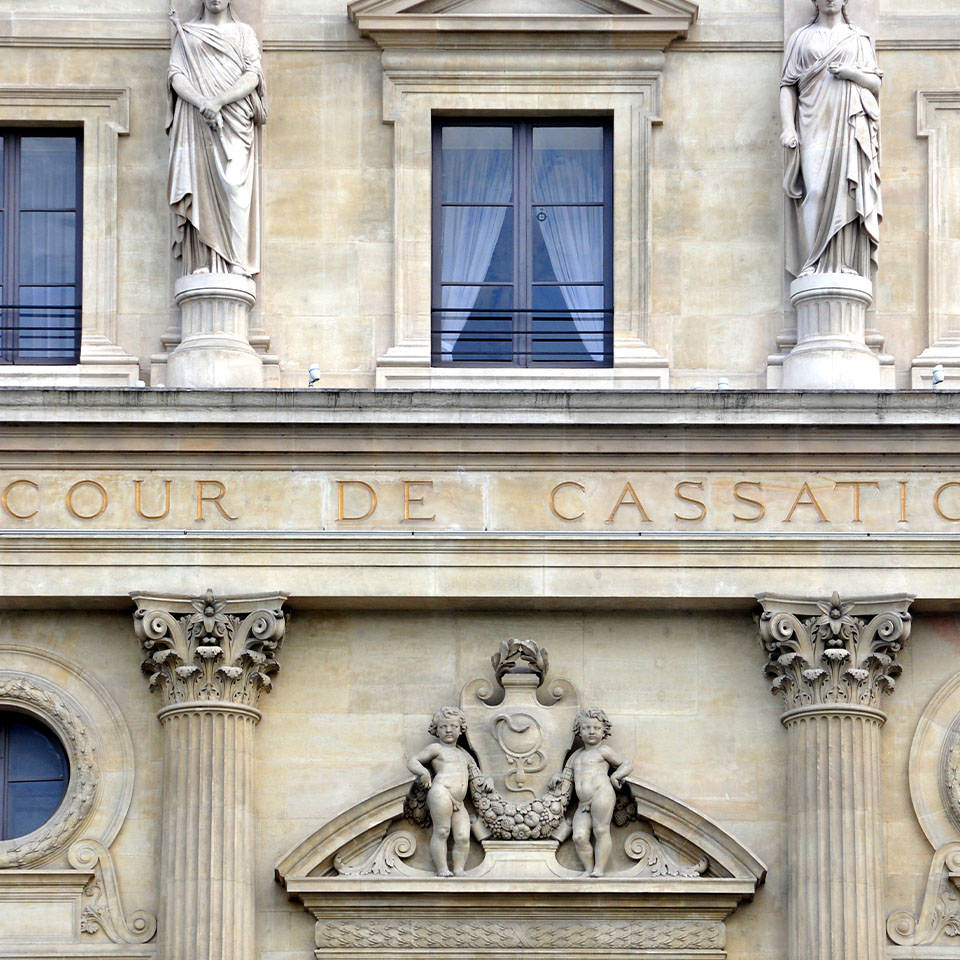
In March 2025, the criminal chamber of the French Court of Cassation ruled in our favour in the final appeal in defamation proceedings brought over a defamatory episode of M6's Enquête Exclusive. The decision is final and was published in the Court's Bulletin, reflecting its precedential value in French defamation law (Cour de cassation, Chambre criminelle, 11 March 2025, pourvoi no. 23-86.339). The Court upheld the Paris Court of Appeal's judgment of 5 October 2023, also in our favour, and confirmed that unedited footage (rushes), obtained through a final court order made by a different judge, may be produced by the person portrayed to show that their words were distorted. The proceedings began with a French court order compelling the broadcaster to release the raw recordings, enforced by a daily fine, and the criminal complaint was brought in collaboration with French counsel. The case shows how we approach European disputes: a Malta-based team directing the strategy, with local counsel in the forum. Read our analysis in Chetcuti Cauchi secures Landmark Defamation Judgement in French Supreme Court, and the earlier Court of Appeal ruling.
Cross-border executive reputation matter.
An online publication inaccurately linked an internationally active technology executive to alleged criminal activity and wider unlawful operations, although the underlying historical proceedings had long been resolved without findings implicating the client. Outdated material continued to circulate through indexed publications and archived references. The matter illustrates how digital permanence, investor due diligence and international business activity intersect, and why such disputes are treated as legal, data protection and governance questions together.
Cloned website and online impersonation.
An family office's website was cloned, creating a risk of client confusion, reputational harm and continued misuse of its online identity. The matter was assessed beyond a simple takedown notice, to identify the enforcement route, or combination of routes, most capable of protecting the organisation's digital identity, and the cloned website was successfully addressed. Read the full family office case study on cloned websites and online impersonation.
Content removal and delisting.
Our work includes takedown requests, negotiations with content providers and search engine delisting, including under the right to be forgotten.
Our Unique Approach to Reputation Protection
Our approach starts from the client's objective rather than from the remedy. A founder preparing a fundraising round needs a different strategy from a family office responding to a coordinated campaign, and both differ from a professional whose outdated record keeps surfacing in due diligence searches.
- Forum first. In European matters, the first question is where to act. The Court of Justice has held that a claimant may sue for rectification of incorrect online information, removal of comments and compensation for all damage before the courts of the Member State in which its centre of interests is located, but not in every Member State in which the content is accessible (Bolagsupplysningen, C-194/16, applying the earlier principle in eDate Advertising). Applicable law is a separate question: the Rome II Regulation excludes defamation and personality rights, so national conflict-of-law rules decide, and the answer can differ from country to country.
- Several tracks in parallel. Defamation law, data protection rights, platform notices and regulatory complaints address different problems. A delisting or data protection route can be more viable than a defamation action, and the strongest strategies often run several tracks together, such as a legal notice to the publisher alongside a GDPR request and a platform notice. Delisting removes a link from search results for a person's name but leaves the page online at source (Court of Justice, Google Spain, C-131/12; EDPB Guidelines 5/2019). It also applies to the EU versions of a search engine rather than worldwide (Google v CNIL, C-507/17), which is why action at source is pursued wherever possible.
- Proportionality and restraint. For visible individuals, aggressive enforcement can renew attention on historic allegations. EU law now also gives courts tools to dismiss manifestly unfounded or abusive cross-border civil claims at an early stage and to order costs against the claimant (Directive (EU) 2024/1069). We therefore recommend escalation only where the claim is soundly founded and serves the client's long-term interests.
"Choosing the forum is the first strategic decision. The same article can be challenged through a defamation claim in one country, a data protection complaint in another and a platform notice everywhere, and the sequence matters."
Dr Danielle Mercieca, Senior Associate, Chetcuti Cauchi Advocates
- Reputation within the wider client picture. Online allegations can affect banking relationships, investor and counterparty due diligence, and applications for residence or citizenship in which an applicant's public profile may be reviewed. Because our immigration, tax and private client lawyers work alongside the defamation team, reputational issues are considered together with the client's wider mobility, structuring and compliance position.
- Boundaries. We do not act to suppress lawful criticism or legitimate public-interest reporting, and no lawyer can responsibly guarantee the removal of content or the outcome of proceedings.
Our Online Defamation Credentials
Dr Jean-Philippe Chetcuti, Managing Partner, and Dr Danielle Mercieca lead a team with experience of online defamation cases, including takedown requests, delisting from search engines, litigation across jurisdictions and complaint proceedings before the IDPC. Dr Chetcuti advises internationally active high-net-worth and ultra-high-net-worth families on private client matters, including reputation management, and has led defamation proceedings in high-profile cross-border cases, including the French proceedings described above. He is recognised in Who's Who Legal for Malta and as a Chambers and Partners-ranked Private Wealth lawyer in Malta, and has served as Chairman of the Malta Branch of the Society of Trust & Estate Practitioners (STEP).
How Our Defamation Lawyers Can Help You
Our defamation lawyers advise on both the immediate response and longer-term reputation protection for clients defamed anywhere in Europe. Assistance typically includes:
- a confidential initial assessment of the content, the available remedies, the right forum and the risks of escalation;
- evidence preservation and documentation of publication, republication and search visibility;
- legal notices, platform notices and delisting requests;
- right of reply and negotiated corrections with publishers;
- regulatory complaints and counter-submissions before data protection authorities;
- defamation proceedings and settlement negotiations, with local counsel where national rules require; and
- coordination with investigators and communications advisers.
Matters involving continuing publication are prioritised. Sharing the relevant URLs, dates and any correspondence at the outset allows a first assessment to be made promptly.
Online Defamation FAQs
[question]What qualifies as online defamation in Europe?[/question]
[answer]There is no single European definition. Defamation is mainly a matter of national law, so what counts, which defences apply and what remedies are available differ between countries. In Malta, defamation is the communication of a statement that seriously harms a person's reputation, including libel and slander, under the Media and Defamation Act (Cap. 579). EU law then governs jurisdiction, platform duties and data protection rights across Member States.[/answer]
[question]Which country's courts can hear an online defamation claim in the EU?[/question]
[answer]Under Article 7(2) of the Brussels I Regulation (recast), as interpreted by the Court of Justice in Bolagsupplysningen, a claimant can generally seek rectification, removal and compensation for all damage in the Member State where their centre of interests is located. They cannot bring a rectification or removal action in every country where the content is accessible. The defendant's home courts may also be available, so the forum needs to be assessed case by case.[/answer]
[question]Can a Malta-based lawyer handle a defamation case in another European country?[/question]
[answer]Yes, in coordination with local counsel where required. Strategy, evidence, data protection complaints, platform notices and negotiations can be run from Malta, while proceedings in another country's courts are brought with counsel qualified there. In the French proceedings described on this page, the Malta team directed the case in collaboration with French counsel through to the final decision of the Court of Cassation.[/answer]
[question]Can anonymous online attacks be traced?[/question]
[answer]Sometimes. Whether an anonymous author can be identified depends on the platform, the records it holds, the country in which it operates and the legal route available, and identification is not always possible. We assess early what can realistically be achieved, preserve the available evidence and, where identification is not feasible, focus on removal, delisting or regulatory routes directed at the platform or the content itself.[/answer]
[question]Can defamatory content be removed from Google search results in Europe?[/question]
[answer]A delisting request asks the search engine to remove links from the results shown for a search on a person's name. Under the GDPR right to erasure and the Court of Justice's Google Spain judgment, the request is assessed by balancing privacy against the public interest, so success depends on the facts. Delisting applies to EU versions of the search engine rather than worldwide, and it does not remove the page from the website that publishes it.[/answer]
[question]How do I report defamatory content to a platform under EU rules?[/question]
[answer]The Digital Services Act requires hosting providers to offer easy-to-use notice mechanisms for content a person considers illegal. A notice should explain why the content is unlawful, give the exact URL, identify the sender and confirm that the information is accurate and complete. Platforms must then give reasons for their decisions, and users can use internal complaints and out-of-court dispute settlement. Whether defamatory material is illegal depends on the applicable national law.[/answer]
[question]What can be done about fake online reviews?[/question]
[answer]The response depends on the platform and the review. Options include a complaint under the platform's content policies or a Digital Services Act notice, a legal notice to the reviewer or platform where the review contains false statements of fact, a data protection request where personal data is involved and, in appropriate cases, defamation proceedings. Evidence that the reviewer was not a customer usually strengthens the position.[/answer]
[question]Do I need to start court proceedings immediately?[/question]
[answer]No. Maltese defamation law encourages alternatives such as the right of reply, voluntary clarifications and mediation, and many matters can be addressed through a legal notice, a negotiated correction, a platform notice or a regulatory complaint. Limitation periods differ between countries and may apply to court action, so early advice matters even where litigation is not the preferred route.[/answer]
[question]Can personal information be removed from the internet?[/question]
[answer]Sometimes. The GDPR gives individuals rights of erasure and objection where personal data is inaccurate, no longer necessary or unlawfully processed, subject to exceptions such as freedom of expression and information. Requests can be made to publishers, hosts and search engines, and a complaint can be lodged with the data protection authority if a request is refused. Content that is lawfully published and remains of public interest may not qualify.[/answer]
[question]What evidence should I preserve before taking action?[/question]
[answer]Preserve the content before it changes: take dated full-page screenshots showing the URL, save the pages in a retrievable format, record where and when the content was found and who has shared it, and keep related messages and correspondence. Avoid responding publicly or contacting the publisher before taking advice, as this can alter the content, escalate the dispute or draw further attention to it.[/answer]
[question]Can online allegations affect residence, citizenship or banking applications?[/question]
[answer]They can. Banks, investors, counterparties and authorities commonly review publicly available information as part of due diligence, and inaccurate or outdated online content can prompt questions that need to be answered. Correcting, delisting or properly contextualising such content, and preparing a clear factual response, can help, although no outcome in any application or relationship can be guaranteed.[/answer]
[question]What if the content is AI-generated or a deepfake?[/question]
[answer]AI-generated content that falsely attributes statements or conduct to a person, imitates their voice or image, or impersonates them can be addressed through platform reporting channels, legal notices, data protection rights (images and voice can constitute personal data), defamation law where false and seriously harmful statements are made, and action against impersonating accounts or domains. Preserving original files, links and timestamps early is important, and forensic support may be needed.[/answer]